James Krüss
Der Leuchtturm auf den Hummerklippen
The Lighthouse on the Lobster Cliffs is a new children’s opera inspired by the maritime imagination of James Krüss, created in honour of the 100th anniversary of his birth. It is a work about the sea — but also about memory. About loss — but also about light.
When I began writing the libretto, I kept returning to one question:
What does it mean to tell a story at the edge of the sea — today?
James Krüss believed that storytelling is not escapism; it is survival. His language carries wit and warmth, but also an undercurrent of exile. Writing this libretto meant entering that space between lightness and gravity.
We are living in a time in which war once again shapes European consciousness. Images of destruction and displacement are no longer distant. Against this backdrop, the story of Heligoland — bombed, evacuated, rebuilt — resonates with renewed urgency.
And yet, the opera does not attempt to explain history. It listens to it. It allows the past to breathe inside the present.
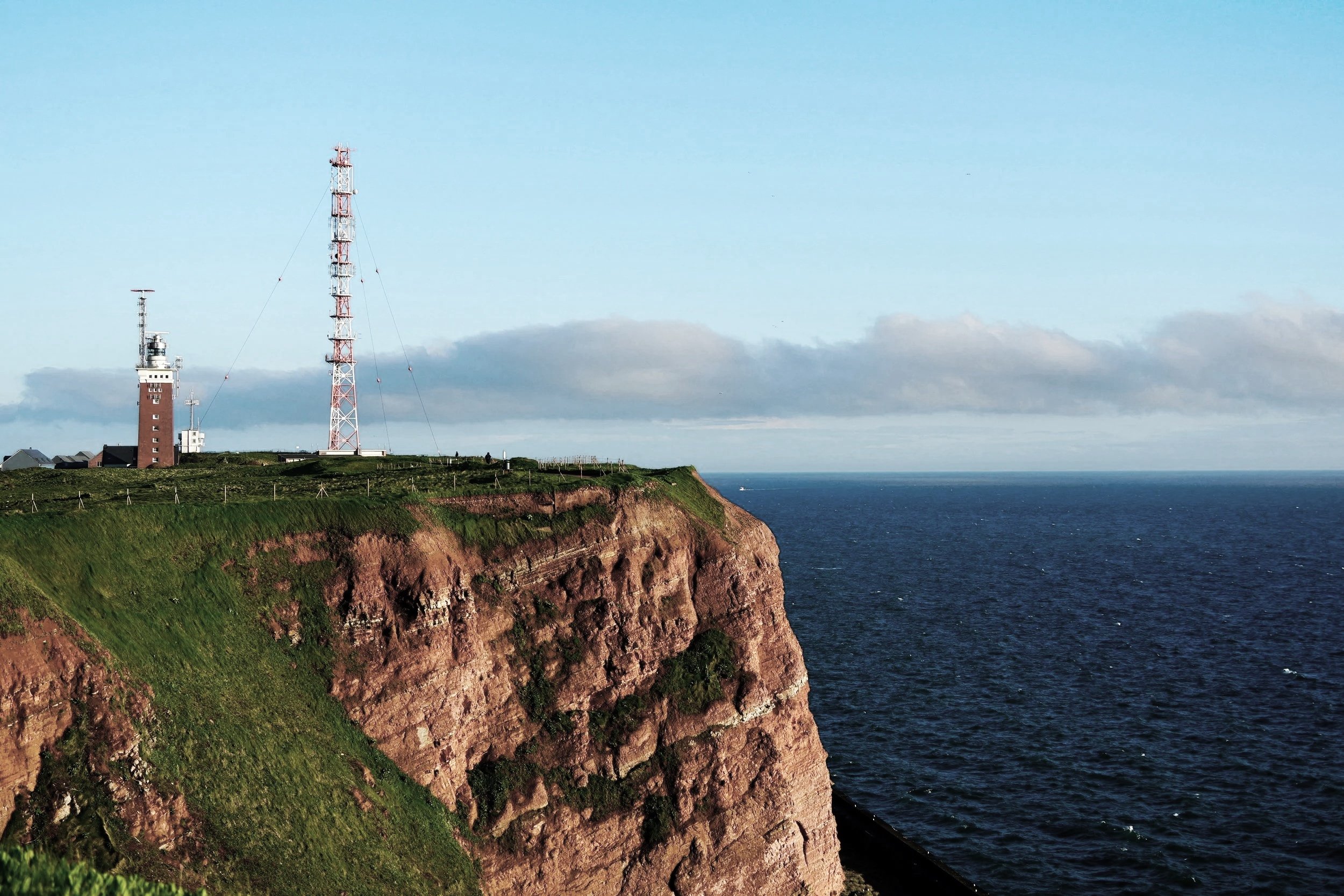
The lighthouse in this work does not promise safety. It promises perspective. It suggests that farsightedness — Weitsicht — is both a nautical skill and a moral one. To look beyond immediate fear. To recognise the horizon even when the sky darkens.
The libretto refuses to simplify. Children encounter ambiguity, humour, silence, contradiction. They are invited to reflect, not instructed to conclude. They are treated as complete human beings — capable of complexity.
If this opera carries a message, it is a quiet one:
Stories can hold what history fractures.
Light can exist without certainty.
And sometimes, the act of telling is already a form of hope.
— Nils Braun
At the edge of the North Sea stands a lighthouse. Around it move figures who carry stories within them: Johann, the keeper of the light; Aunt Julie, who has lost her home; Hans im Netz, a restless spirit; and the seagulls who circle above, witnessing everything. Together they form a fragile community shaped by wind, salt and remembrance.
The opera unfolds as a tapestry of nested tales. Stories are told at dusk, carried by the tide, interrupted by laughter, shadowed by history. Beneath the playful surface lies the memory of Heligoland’s destruction during the Second World War — a historical rupture that quietly resonates through the work. Yet this is not a story about ruins. It is a story about resilience.
The lighthouse becomes more than architecture. It is a metaphor for orientation in uncertain times — a place that does not command the sea but observes it, that does not silence the storm but endures it.
Composed by Joaquín Alem and staged by Volker Schindel, the opera brings together professional soloists, the Academy of the State Orchestra Oldenburg and a children’s chorus in collaboration with Oberschule Edewecht. Performed in both High German and Low German, the production bridges generations, languages and regional memory.
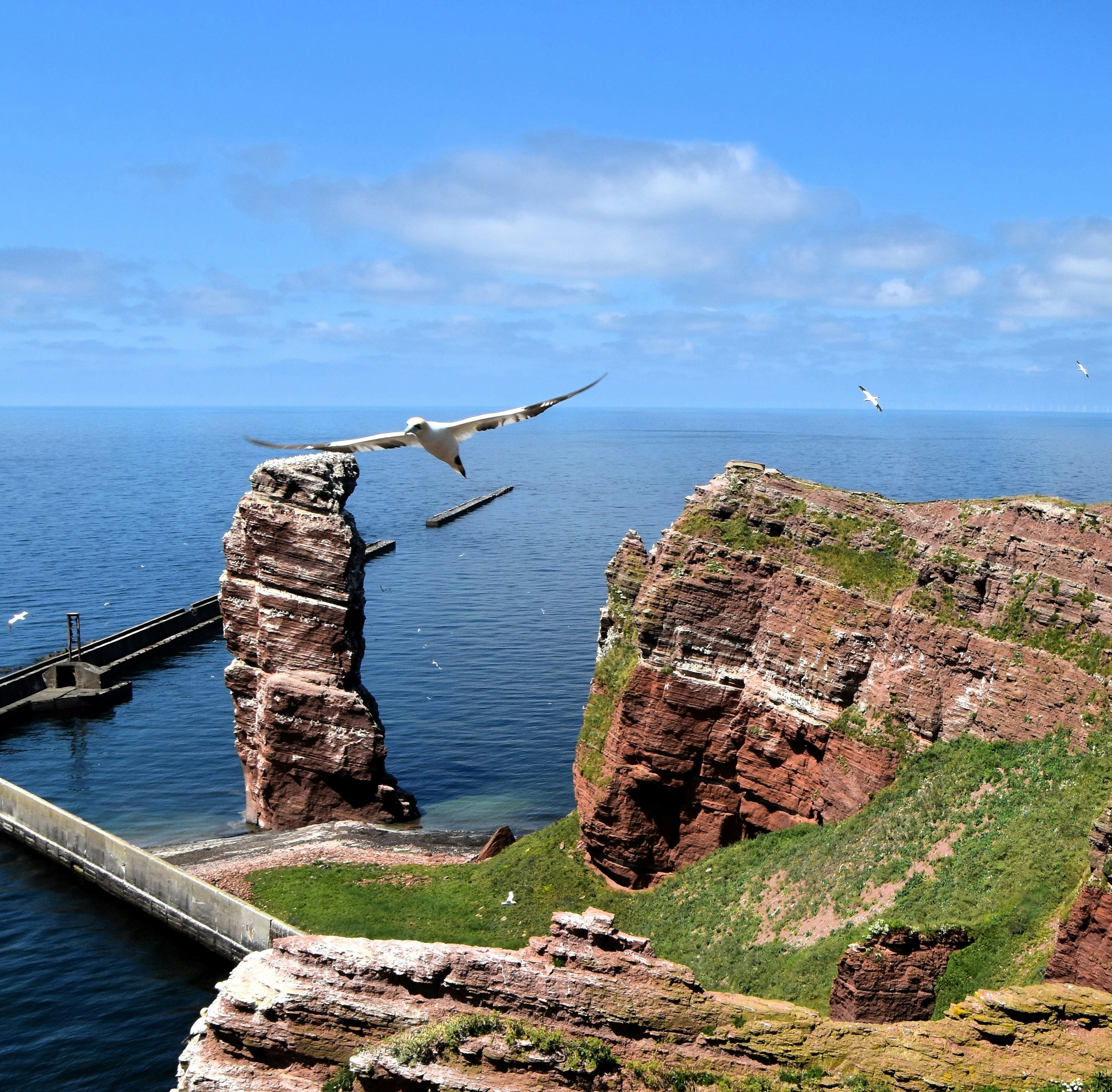
The premiere will take place in May 2026, followed by a planned guest performance on Heligoland — returning the story to the island where James Krüss first learned to listen to the wind.
The artistic language of The Lighthouse on the Lobster Cliffs is built on stillness and movement — on the rhythm of waves and the breath between words.
Joaquín Alem’s score moves between chamber intimacy and subtle expansiveness. The bandoneon breathes like wind across water; strings shimmer like distant horizons; percussion echoes the unpredictable pulse of the sea. Electronic textures dissolve and re-emerge, creating sonic space rather than spectacle. The music never overwhelms the narrative; it listens to it.
The libretto unfolds in layers. Stories emerge within stories, memory folds into imagination. A poltergeist becomes both comic relief and echo of displacement. Seagulls speak not as caricatures but as observers of human frailty. A turtle sings of patience, of slowness in a hurried world. A tale of mischievous twins transforms into a reflection on responsibility and consequence.
Children are not treated as a simplified audience but as perceptive participants. The collaboration with Oberschule Edewecht is central to the project’s identity. The students’ voices — particularly in Low German — root the work in living regional culture while expanding its emotional reach.
The Academy of the State Orchestra Oldenburg forms the musical backbone of the production, allowing young professional musicians to engage in a process that values listening as much as virtuosity. Rehearsal becomes dialogue. Performance becomes shared experience.
The planned performance on Heligoland is not merely a tour date. It is a symbolic gesture. To perform this opera on the island that shaped James Krüss’ imagination is to close a circle — not nostalgically, but consciously.